|
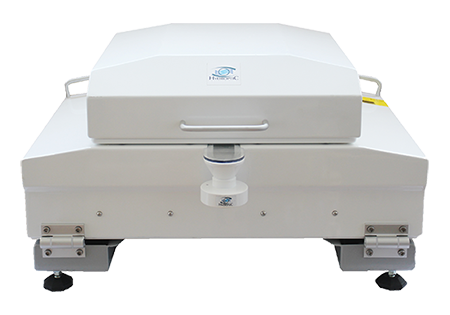
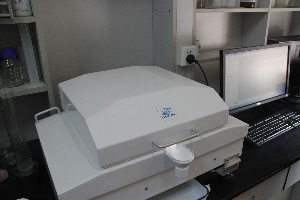
法国HYDROPTIC公司——ZooSCAN浮游动物图像扫描分析系统 6 E" F0 k% \2 F; N' g( f
+ }8 {# @5 e5 N
: v8 {1 j4 j& q+ \- P5 S( _/ u
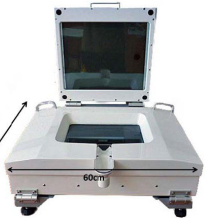
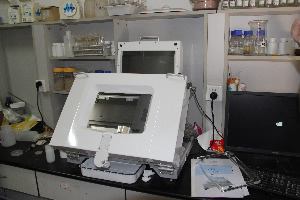
) s& D0 c. M8 n& c- h( R! J/ V. J( `ZooSCAN浮游动物图像扫描分析系统主要用于对液体中的浮游动物样品进行计数、大小测量、种类鉴定以及生物量测定。9 k: w( D8 }/ I5 S9 V0 T
ZooSCAN浮游动物图像扫描分析系统系统是由ZooSCAN、ZooProcess和EcoTaxa网站等共同组成的,ZooSCAN是硬件部分,主要进行浮游动物样品扫描,形成数字图像。ZooProcess和EcoTaxa是软件部分,分别以标准化的程序处理原始图像、对不同个体的形态参数进行自动测量和对图像中的浮游动物进行自动分类和计数。$ W) h4 [6 m6 V1 L% x: _6 t
# b( r6 {6 i+ Y, h: L
! D7 w9 @6 S* X; ^4 i# H) S! L5 L' NZooSCAN浮游动物图像扫描分析系统工作流程:4 e0 b b9 q. |, R% T n
1)扫描空白背景;: x. p2 L: i! G5 S
2)扫描样品,获得原始图片和元数据信息;) U3 w$ z$ z* M8 m
3)通过ZooProcess软件,标准化原始图片,提取并测量图片中不同个体的形态参数;2 l: ?, W: E5 Z5 P: m/ X3 k0 \# F [( e
4)通过对形态学参数的提取与分析,可进一步获得样品的粒径组成、生物学体积等信息
# R6 s {8 k; p1 x" f 5)过EcoTaxa网站已建立的图像培训数据库,针对已扫描的样品图像进行浮游动物的自动识别,获得不同类群浮游动物的数量。+ }$ g! n3 C2 c/ M
: m: b# O8 L2 N5 ]9 h7 pZooSCAN浮游动物图像扫描分析系统应用领域:
, t2 F1 P' L- Z4 l生态学调查、渔业、水产养殖、教育。9 _1 j7 e0 X4 M, }4 o
6 B/ ? n' R0 M
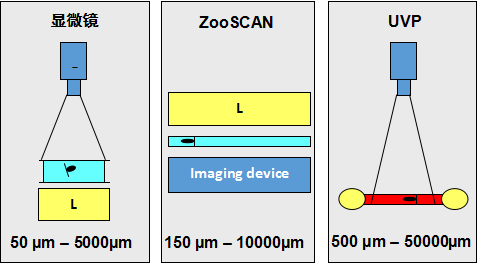
ZooSCAN浮游动物图像扫描分析系统原理:- y8 E6 A6 x: Z
- O/ i) K& }5 ~/ c* |8 C
+ l9 `9 k3 \7 ?+ d | 2 t0 O% a1 I E! J( f
|
. D1 P0 M6 k. i% r | Microscope
q; x/ Z4 r" C$ a) O3 [3 U' b实验室
1 o9 m K1 _, I. B# G5 s( q* p | ZooSCAN3 h! I& t4 ?" } H8 G% N5 a/ _
实验室+野外(现场)
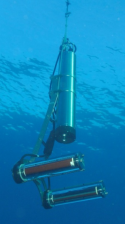
3 x$ i# B% |( j; U) i0 U. P# k | UVP
% q- r! {9 Z$ A3 S# I8 S) F野外(水下原位)
6 D6 T* s" h6 P |
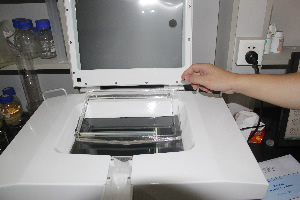
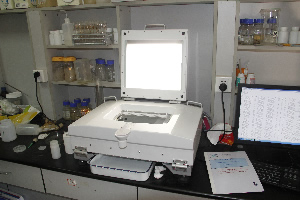
ZooSCAN浮游动物图像扫描分析系统(CNRS专利)系统使用扫描仪技术,这项技术带有传统照明设备和一个用于放置液体的浮游动物样品水密的扫描室。ZooSCAN浮游动物图像扫描分析系统可以记录高分辨率的数字化图像,然后这些数字化的图像可以通过电脑程序进行研究。虽然这个数字化的浮游动物图像比使用一个双目显微镜获得的图片的分辨率要低,但这项技术已被证实,在有大型样品种类时使用是再适合不过了。通过与EcoTaxa网站上已有的浮游动物数据库进行对照,可以自动的识别、鉴定样品中浮游动物的种类。
2 u, N& Q4 U3 n3 x8 C1 n/ \2 [$ Y* j% x/ \6 Z
: u% ?7 \' Y! k5 c9 {& M+ w4 U, B1 h! r' I8 A i
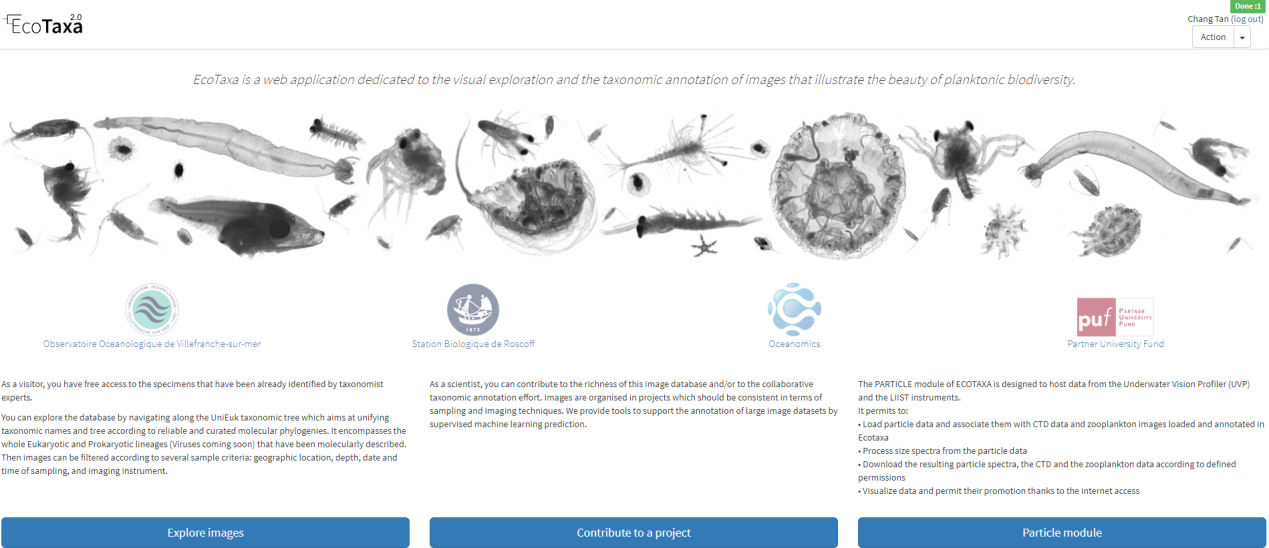
浮游动物识别、鉴定网站——EcoTaxa
; [: ~* [% _) R
1 l0 [; l6 b, ~* q0 p4 VEcoTaxa网站主界面 ) Y. u5 W9 q% z J5 M
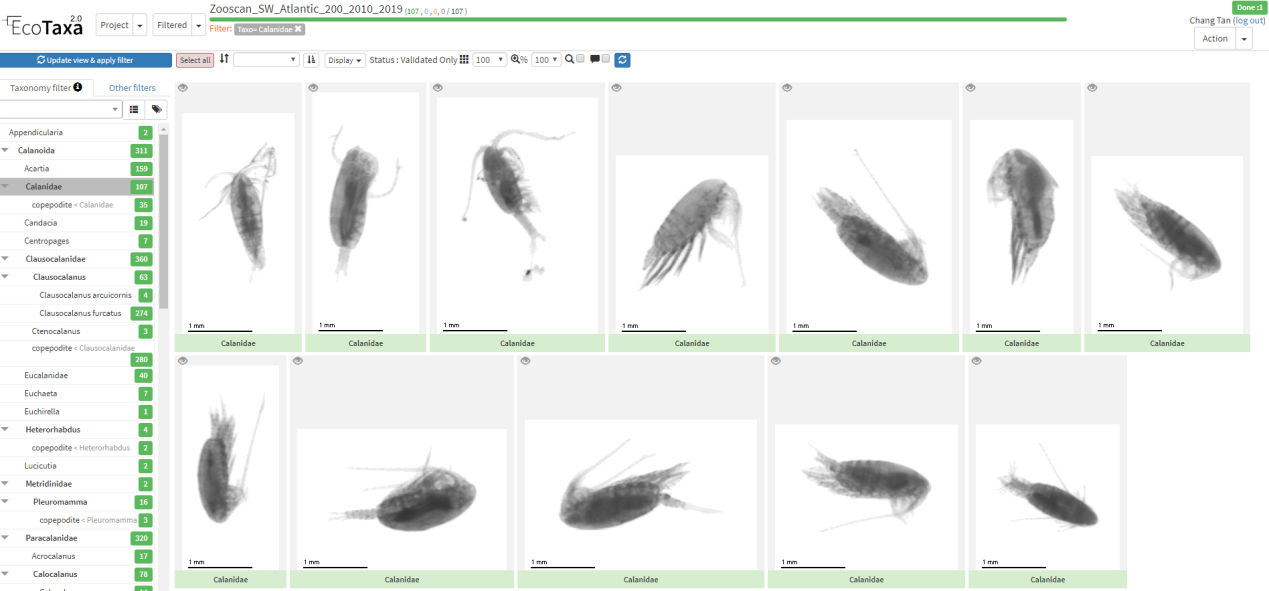
* m0 l- l C* V, LEcoTaxa浮游动物分类界面 ! x0 M" t% _# F5 D' L
. h4 @) k) W8 |: f2 u: ^
# A! N8 U2 A4 E% S8 H- X
为什么使用ZooSCAN浮游动物图像扫描分析系统?
7 w% N& ~. X9 u+ s0 H 传统分析方法(镜检)
. J6 B8 f' O. Z) _, K◇ 需要专业人员1 g* ]& G" D3 b+ b/ p3 u
◇ 操作过程相当繁琐; ^ |. @, W2 R! }) s; r! G/ w' F3 S
◇ 后期数据处理工作量极大& o! q, c/ o2 @4 X1 F
ZooSCAN浮游动物图像扫描分析系统(超高质量图像扫描)3 K1 Q0 U [, c L- B. C3 m
◇ 无需专业人员(建库之后)
; ]0 m" H' w4 H9 N. E6 S' `/ C1 M◇ 操作过程非常简单3 ]% U) F3 ]2 S* H
◇ 后期数据由软件自动处理! b0 X9 A$ M) B& ~" ~
: @; i" G# u/ @) C1 aZooSCAN浮游动物图像扫描分析系统规格:% _. X/ F/ g; s8 Q
◇ 型号:ZSCA04/ ]# R( a6 H; f
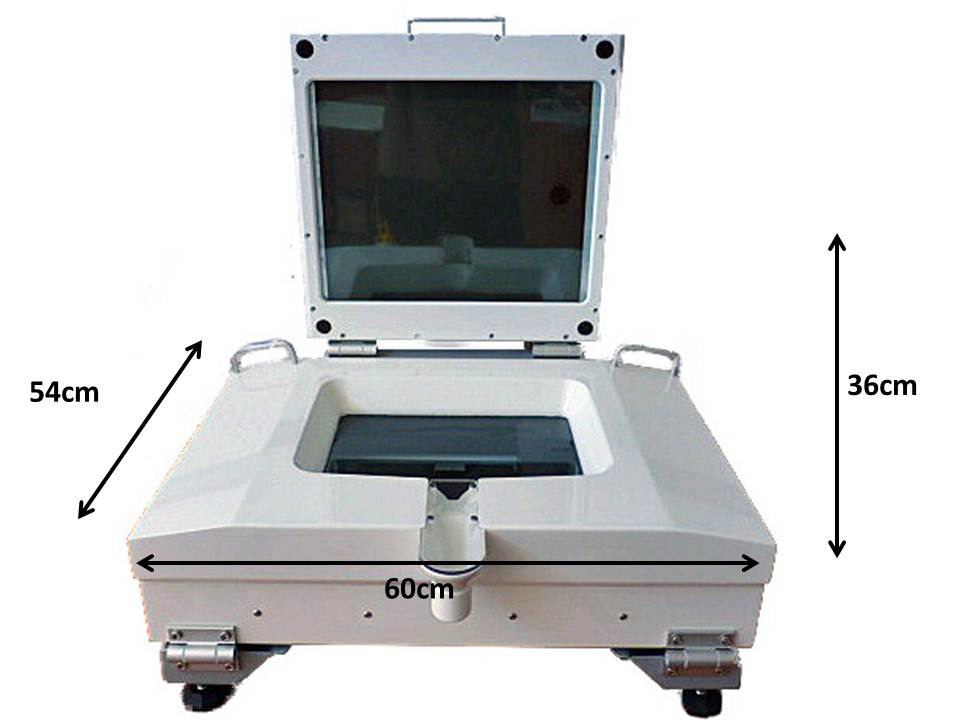
◇ 规格 (LxWxH): 60 x 54 x 36 cm (关上盖子) z. c8 M4 o+ R i
◇ 质量: 25 Kg
) I# D' ~2 h" P) @7 w: }◇ 输入电压: 110 to 230 VAC, 50 to 60 Hz
% q9 _# w e- a4 o8 ~( S6 Q( K◇ 接口: USB 2.0
) O8 c! ?5 }, w% |2 [8 e
. ]4 r& ~& H, }* c s- ~' q2 S {, ?4 ?
ZooSCAN浮游动物图像扫描分析系统特性:
/ i$ o, a, ?& c7 c◇ 应用(专):专门用于浮游动物研究$ W Z t6 }7 M
◇ 功能(强):自动鉴定、分类、计数、计算生物量
: |( C. v/ `* ]6 L6 d◇ 效率(高):快速批量分析大量浮游动物样品) d# [+ z2 D* n R' F U5 T U1 v3 b# I
◇ 信息量(大):经纬度、采样深度、网型、网口面积等
3 X" N4 e" E% p/ L7 m◇ 照明系统(优):确保图像的质量和对比度
1 H. q9 G$ M: y5 q5 s$ `: M) g◇ 图像解析度(高):4800dpi
; j9 s- h* m2 `8 A+ a" ]( Y◇ 图像分辨率(高):14150 x 22640 (3.2亿像素,1GB)
9 G" L& C' r; B4 C9 B! V N" V2 p
7 l* m; j3 h0 n8 t+ J
% a9 o' v6 D! p, D z& ?3 w3 f% D* }/ H* b# ?# V) i$ Q1 w
| % E% u4 @0 }9 T. C
| ZooSCAN正在进行扫描9 B& S9 H" R- M# M9 Q7 B- m2 M8 p
| 回收ZooSCAN样品池中的样品
: j' `* a9 }1 e# v8 w# F1 O | 9 X2 _% Z* x/ O' R# _. W
|
3 |) |1 r/ m# T' \6 c | 浮游动物样品池,透明度佳
1 o, v" K; b/ c& t( k: A | ZooSCAN主机+ZooProcess软件
% [/ K( c# \- j7 A% P$ _ |
7 _2 ~+ G9 y! u2 K2 a* k- ]& }% [
6 H# c3 d! G$ [4 @& u
代表文献:
8 Z+ S _/ `8 D3 p6 X1.孙 松, 毕永坤, 孙晓霞,2013.基于图像技术的胶州湾浮游动物优势种体型参数与生物量转换关系研究(RELATIONSHIP BETWEEN SHAPE PARAMETERS AND DRY WEIGHT OF THE DOMINANT ZOOPLANKTON IN JIAOZHOU BAY BASED ON IMAGE METHOD).海洋与湖沼(OCEANOLOGIA ET LIMNOLOGIA SINICA).44(1):15:22.% E: [& p6 p; N- v9 Y% G( {
2.Pieter Vandromme, Lars Stemmann, Carmen Garcìa-Comas, Léo Berline, Xiaoxia Sun, Gaby Gorsky,2012.Assessing biases in computing size spectra of automatically classified zooplankton from imaging systems: A case study with the ZooScan integrated system.Methods in Oceanography.1–2:3–21.
2 ], r. b6 U, z3.Stéphanie Lelièvre, Elvire Antajan, and Sandrine Vaz,2012.Comparison of traditional microscopy and digitized image analysis to identify and delineate pelagic fish egg spatial distribution.Journal of Plankton Research.34(6):470-483.
/ K+ s* [5 u- U/ i, d0 q$ m7 L: t4.Jesse R. Powell and Mark D. Ohman,2012.Use of glider-class acoustic Doppler profilers for estimating zooplankton biomass.Journal of Plankton Research.34(6):563-568.7 o1 m7 t# Z! s @ T
5.Hirche, H., Alfred Wegener Inst. for Polar & Marine Res., Bremerhaven, Germany, Schulz, J., Hanken, T.,2012.A modular imaging system for collection and analysis of live and preserved zooplankton samples.OCEANS, 2012 - Yeosu.(1-4).' ~% y# m/ N# X7 z. l" [
6.Lin Ye, Chun-Yi Chang, Chih-hao Hsieh,2011.Bayesian model for semi-automated zooplankton classification with predictive confidence and rapid category aggregation.Marine Ecology Progress Series.441:185-196.
$ ~; d, m4 D+ E# p1 j: u7.孙晓霞, 孙 松, 王世伟, 刘梦坛, 赵永芳,2011."图像自动识别技术在胶州湾浮游动物生态学研究中的应用(APPLICATION OF AUTOMATED IMAGE IDENTIFICATION IN ZOOPLANKTON
: o( S, s; r1 U# QECOLOGY STUDIES IN THE JIAOZHOU BAY)".海洋与湖沼(OCEANOLOGIA ET LIMNOLOGIA SINICA).42(5):647:653.) @ X ~) V3 s# X
8.Gaby Gorsky, Mark D. Ohman, Marc Picheral, Stéphane Gasparini, Lars Stemmann, Jean-Baptiste Romagnan, Alison Cawood, Stéphane Pesant, Carmen García-Comas and Franck Prejger,2010.Digital zooplankton image analysis using the ZooScan integrated system.Journal of Plankton Research.32(3):285-303.
3 G- {% o8 p* P5 \9.Sabine Schultes, Rubens Lopes,2009.Laser Optical Plankton Counter and Zooscan intercomparison in tropical and subtropical marine ecosystems.Limnology and Oceanography.771-784.: k8 F7 L+ q3 B6 y9 @
10.LISA R. GILFILLAN, MARK D. OHMAN,2009.OCCURRENCE OF PLASTIC MICRO-DEBRIS IN THE SOUTHERN CALIFORNIA CURRENT SYSTEM.CalCOFI Rep..Vol. 50, 2009.9 ~$ t# h H4 X2 _- {& i7 w5 N
11.Fabien JOUENNE, Ian PROBERT and Daniel VAULOT,2008.Plankton taxonomy in the computer age.Cah. Biol. Mar..49 : 355-367.
7 \/ R8 T1 \3 x2 I12."G. Gorsky, L. Stemmann, R. Rakotomalala, S. Gasparini, F. Ibanez, E. Antajan, M. Picheral, C. Garcia; |6 h0 T/ \* F8 K
Comas",2007.HARMONIZATION OF SAMPLING METHODS AND TREATMENT OF ZOOPLANKTON TIME SERIES.Rapp. Comm. int. Mer Médit., 38, 2007.490.# B4 \& ^, Z- w) r/ X! a% M
13.L. Stemmann, J.B. Romagnan, M.G. Mazzocchi, C. Garcia Comas, E. Antajan, M. Picheral, N.J. Daly Yahia, G. Gorsky,2007.ZOOPLANKTON COMMUNITY STRUCTURE AND SIZE DISTRIBUTION IN THE SOUTHERN TYRRHENIAN SEA DURING THE 2005 CIESM SUB 1 AND SUB 2 CRUISES.Rapp. Comm. int. Mer Médit., 38, 2007.606./ f! m" g0 {: [7 b8 _
14."By Mark C. Benfi eld, Phi l ipp e Gros j ean, Phi l F. Culverhouse , Xabi er Irigoi en, S! T5 n1 W5 @; q; L a0 e
Michael E . Si eracki , An gel Lopez-Urrutia, Hans G. Dam, Qiao Hu,9 a3 ]: _; u/ D2 ^3 k
Cabel l S . Davis , Al len Hansen, Cynthia H. Pi l skaln, Edward M. Riseman,
8 {- p* n q# C$ a+ ~: z4 G# l+ XH oward Sc hultz, Paul E . Utgoff, and Gabri el Gorsky",2007.RAPID: research on automated plankton identification.Oceanography.20(2):172-187.
# |1 z- ?9 b4 s15.par Warembourg, C., Grosjean, Philippe, Picheral, M., Ibanez, F., Gorsky, G.,2005.Le ZOOSCAN: un système d’imagerie rapide pour la mesure et la classification automatique du zooplancton.Référence J. Recherche Océanographique, 30, (page 1-12) ..5 W0 i' s( H( a9 y
16.Philippe Grosjean, Marc Picheral, Caroline Warembourg and Gabriel Gorsky,2004.Enumeration, measurement, and identification of net zooplankton samples using the ZOOSCAN digital imaging system.ICES Journal of Marine Science.61(4):518-525.% U* E! g# t5 F4 w8 W1 ]
% H! v. P3 R2 f3 S& _! o6 E
d7 F, Y- G: O3 p
* B) G( u" @1 ~% ]6 X5 M
更多关键词:浮游动物图像原位采集系统,浮游动物图像采集,浮游动物自动鉴定仪,法国HYDROPTIC公司,ZooSAN,浮游动物图像扫描分析系统,水下颗粒物采集系统
" }/ s* h* m3 ?% C3 M, C0 i4 i7 S+ v9 b; ]
3 @( Q6 E0 J$ J3 ^6 s% U( L! |
' a/ O/ U) N ~/ Z3 a' I
<strong> |


 6 q+ C+ y$ T/ a8 }) o
 + W: l t- r: K
 6 ^8 i2 W5 \0 E0 u
 9 M! T7 b% _' E4 g; k
 ( H7 G5 U( F/ W* X; K